

When we talk about Aviator, we are not referring to a standard slot machine with rotating reels and paylines. Aviator is a crash-based game created by Spribe that has captured the UK online gaming world by storm, and its RTP value is among the most discussed subjects among gamblers who seek to understand their long-term odds. The game presents a increasing multiplier curve that ascends from 1x higher, and the aim is to withdraw before the line fails. Because of its simple, fast-paced nature, many players categorize it with slots when thinking about return to player percentages, but the workings that create that RTP are completely different. In this analysis, we will examine exactly what the Aviator RTP means, how it is determined, what fluctuation you can anticipate, and how features like auto cashout and dual betting interact with the payout system. We will also look at the betting range, the maximum win possibility, and useful methods to apply RTP information without falling for popular misconceptions. By the time you finish reading, you will gain a deep comprehension of how the game’s mathematical core works and why it is important for all sessions you play.
What Is RTP Indicate in Aviator?
RTP , also known as RTP, is a theoretical percentage that reflects how much of the total money wagered on a game will be given back to players over an extremely large number of rounds. For Aviator, the commonly cited RTP is 97%, which means that for every £100 wagered across all players and all rounds, the game is programmed to return £97 in winnings, leaving a house edge of 3%. This figure is not a certainty for any individual session, nor does it mean you will get back £97 if you wager £100 in a single sitting. Instead, it is a statistical average that emerges over millions of rounds. The RTP in Aviator is built into the probability density function that governs how often the multiplier crashes at low values versus how often it reaches high multiples. For example, the game is configured so that the multiplier crashes at 1x or just above it comparatively frequently, which creates the house edge, while occasionally allowing multipliers to soar into the hundreds or thousands, generating large payouts that balance the overall return.
What makes RTP in Aviator especially interesting is that it is independent of player strategy in the aggregate, yet individual outcomes are heavily influenced by cashout decisions. The game’s algorithm does not know or care when you press the button; it simply generates a crash point for each round. If every player used a entirely random cashout strategy, the collective return would converge to 97% over time. In reality, players often try to time their exits based on patterns, gut feelings, or automated rules, which can cause their personal RTP to drift above or below the theoretical figure in the short to medium term. This is why we always emphasize that RTP is a long-term measure and should not be used to predict what will happen in the next ten or even hundred rounds. The 97% figure is a helpful benchmark for comparing Aviator to other casino games, but it does not override the fundamental randomness of each individual crash point.
How Volatility Defines the Aviator Experience
Volatility, or variance, describes how much and how often a game pays out relative to its RTP. Aviator is a high-volatility game, which means that wins are rare in terms of consistent small returns but can be extremely large when they do occur. This is a direct consequence of the crash mechanic: the multiplier can crash below 2x many times in a row, leading to a rapid depletion of your balance if you are aiming for moderate cashouts, or it can suddenly climb to 500x and deliver a massive payout that more than covers previous losses. The high volatility is not a flaw; it is the design feature that makes the game exciting and, for many players, compelling. When we look at the multiplier distribution, we see that roughly 60% of rounds crash at 2x or lower, while only a tiny fraction reach 100x or beyond. This means that if you set a cashout target of 2x, you will win more often than not, but the small size of those wins will struggle to offset the losses from the inevitable early crashes.
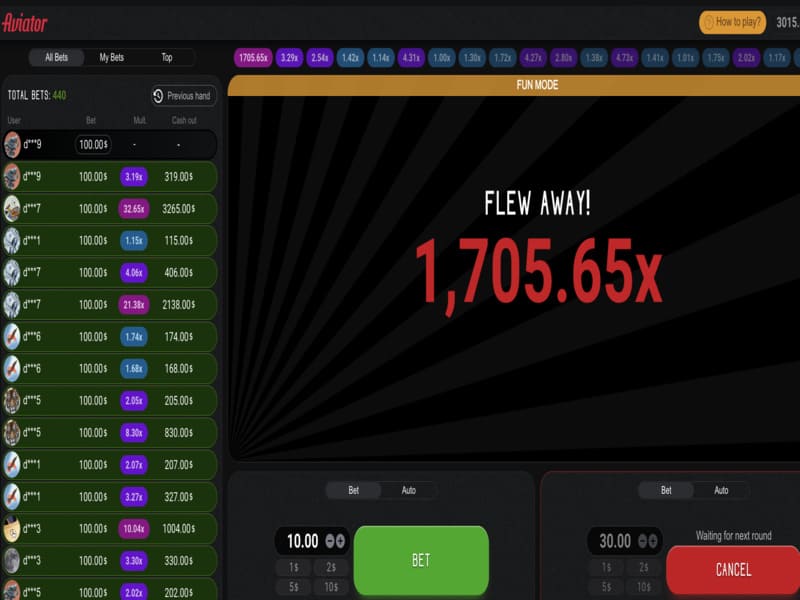
The interaction between RTP and volatility in Aviator is something every player should grasp before committing real money. A high RTP of 97% combined with high volatility means that the game can sustain long losing streaks without violating its mathematical promise. In practical terms, a £100 bankroll could disappear in a matter of minutes if you consistently chase multipliers above 10x, because the probability of hitting those multipliers is low. Conversely, a conservative strategy of cashing out at 1.5x or 2x will yield more frequent wins, but the 3% house edge will still grind down your balance over hundreds of rounds because the occasional early crash at 1.00x will erase several successful small cashouts. Volatility also affects the maximum bet you should consider; larger bets amplify the swings, and during a cold streak, they can exhaust your bankroll before you ever see a high multiplier. We always advise that players choose a bet size and cashout strategy that aligns with their risk tolerance and session length goals.
Practical Ways to Use RTP Knowledge As Playing Aviator
Recognizing that Aviator has a 97% RTP and high volatility is the starting point, but using that knowledge efficiently needs a shift in how you approach each session. The first useful step is to acknowledge that no betting system can defeat the house edge in the long run. Martingale, Fibonacci, or any progressive staking plan does not change the probability of the next crash point. What RTP knowledge can do is assist you set realistic expectations and control your bankroll in a way that increases your playing time and maximises enjoyment. For example, if you have a budget of £50 and you desire to play for an hour, you can work backwards using the RTP and average round duration to determine a sensible bet size. With rounds lasting about 8 to 10 seconds, you might play 300 rounds in an hour. At a 97% RTP, the expected loss on a £1 bet per round would be 3p per round, or £9 over 300 rounds. This estimation, while conceptual, implies that a £1 base bet could see you through the session with a reasonable chance of keeping within your budget, though volatility will cause significant deviations.
Another useful use of RTP awareness is in choosing your cashout targets. Since the game’s return is focused in rare high multipliers, consistently cashing out at very low values like 1.1x will result in a high win frequency but will not capture enough value to offset the 3% edge when the inevitable 1.00x crashes occur. Conversely, always aiming for 100x will lead to long losing streaks that can drain your balance before a win materialises. A measured approach that merges a moderate auto cashout on one bet and a manual high-multiplier chase on a smaller second bet can align your personal play with the statistical distribution of the game. We also suggest using the provably fair verification tool periodically to reinforce the understanding that outcomes are random and not rigged. When you see the hash and confirm that the crash point was predetermined, it becomes less difficult to resist the temptation to chase losses or believe in hot and cold streaks. Ultimately, the RTP value is a long-term compass, not a short-term map, and the most successful players are those who use it to shape their discipline rather than to predict individual rounds.
In conclusion, we should talk about the maximum win potential and how it ties into the RTP. Aviator does not have a fixed jackpot, but the multiplier can conceptually reach 1,000,000x, though most casinos apply a maximum win cap per round, often around £10,000 or £25,000. This cap does not alter the RTP because the probability of hitting such extreme multipliers is incredibly low, and the contribution of those outcomes to the overall return is minimal. For the vast majority of players, the practical ceiling is much lower, and the game’s 97% RTP is delivered through a combination of frequent small crashes and occasional medium-to-large multipliers. By holding your bet size proportionate to your bankroll, using auto cashout to maintain consistency, and recognizing that losses are part of the statistical framework, you can interact with Aviator in a way that respects both its mathematical design and your own entertainment goals.
Essential Game Features That Impact Payouts
While Aviator does not have traditional slot features like free spins or wild symbols, it contains several built-in tools that directly affect how payouts are achieved and how players interact with the RTP. The most notable of these is the auto cashout function, which lets you to set a predetermined multiplier at which your bet will automatically be cashed out. This feature eliminates the element of human hesitation and ensures that you consistently leave at your chosen target, provided the multiplier reaches that level before crashing. If you set auto cashout to 2x, you will win exactly 2x your stake on every round that reaches 2x or higher, and you will lose on any round that crashes below 2x. This consistency can help you follow a disciplined strategy, but it also means you will never capture multipliers above your set point, which could limit your exposure to the large wins that drive the 97% RTP.
Another important feature is the real-time stats panel, which displays the results of recent rounds and often features a history of the last 50 to 200 crash points. While this data is purely historical and has no predictive value, many players employ it to look for perceived patterns or to decide when to increase their cashout targets. We must emphasise that each round is independent, and the multiplier is generated using a cryptographic hash that ensures no correlation with past results. The chat function is also a notable social element, where players can share their wins and strategies in real time. Although it does not affect payouts, the chat can influence behaviour, sometimes encouraging riskier play after seeing others win big. Additionally, some versions of Aviator include a rain feature, where the casino or other players can distribute free bets into the chat, giving you extra chances to play without risking your own money. These bonuses effectively enhance your personal RTP for those specific rounds, as you are playing with house funds.
Here are the core features that define how you experience Aviator’s payout structure:
- Auto Cashout: Locks in a multiplier automatically, promoting discipline and stopping late cashouts.
- Dual Betting: Enables two simultaneous bets per round, facilitating mixed strategies to control volatility.
- Live Statistics: Shows recent crash points, which can guide but should not control betting decisions.
- Provably Fair Verification: Allows you to check the fairness of each round using server and client seeds.
- In-Game Chat and Rain: Adds a social layer and random free bet drops that momentarily boost return potential.
Wager Options and How They Affect Your RTP Strategy
The stake range in Aviator varies on the online casino hosting the game, but a common range we see at UK-facing sites is from £0.10 to £100 per round. Some platforms may have a lower minimum of £0.05 or a higher maximum of £500, but the core game does not have a universal limit. It is important to note that the bet size you choose does not affect the underlying RTP of 97%. Whether you wager £1 or £50, each round’s crash point is decided independently, and https://www.reddit.com/r/poker/comments/1l4tcbj/name_a_hold_em_hand_and_flop_where_you_have_the/ the probability of any given multiplier is exactly the same. However, bet sizing has a significant effect on your personal RTP experience because it controls how quickly your bankroll is opened to the game’s volatility. A player betting £0.10 per round can survive hundreds of consecutive losses without significant financial damage, while a player betting £10 per round could see their entire deposit disappear in a few minutes if they hit a run of early crashes.
Many seasoned Aviator players use the dual-bet feature to apply a hybrid strategy that attempts to smooth out volatility while still securing high multipliers https://aviatorcasinogame.eu/. The interface enables you to place two separate bets on the same round, each with its own cashout button. A typical approach is to set a smaller bet with an aggressive cashout target, such as 1.5x or 2x, and a larger bet with a conservative target or even no auto cashout, intending to manually cash out at a much higher multiplier if the round looks good. This does not change the RTP, but it can alter the distribution of returns in a way that seems more controlled. For example, you might bet £1 on the conservative side and £0.50 on the aggressive side. If the round crashes at 1.3x, your aggressive bet loses, but your conservative bet returns £1.50, partially offsetting the loss. Over time, this can reduce the psychological impact of losing streaks, though it cannot beat the 3% house edge in the long run.
The Authoritative Aviator RTP Figure and What It Tells Us
Spribe, the developer behind Aviator, has publicly disclosed that the game’s return to player is 97%, and this figure is uniform across all licensed online casinos that host the game without changing its core parameters. This is a comparatively high RTP versus many online slots, which often vary from 94% to 96%, and it places Aviator in the upper tier of casino games in terms of theoretical value. The 97% RTP is not a element that operators can adjust on a whim; it is hard-coded into the game’s provably fair algorithm. When you play Aviator at a UK-facing site, you can verify each round’s fairness by checking the hash values provided, which show that the crash point was determined before the round began and was not manipulated after bets were placed. This transparency provides a layer of trust that is not always present in traditional slot games, where the RTP is claimed by the provider but cannot be independently audited by the player in real time.
The 97% number tells us that Aviator offers a lower house edge than many competing games, but it does not show the whole story about how that edge is encountered. Because the game’s payouts are highly skewed, the house takes its 3% edge mainly through the frequent low-multiplier crashes that eliminate bets when players hold on too long or when the crash occurs almost immediately. For instance, crashes at 1.00x or 1.01x are not uncommon, and these rounds result in a total loss for anyone who did not cash out instantly. On the other hand, the occasional 1,000x or 10,000x multiplier yields enormous sums relative to the stake, which returns the average return back to 97%. This distribution means that the RTP is not experienced evenly across all sessions. You may go through long stretches where your balance drops steadily, punctuated by rare but significant wins that bring back the equilibrium. Understanding this pattern is essential for handling expectations and bankroll effectively.
Grasping the Aviator Game Mechanics
Aviator is part of a category of casino games referred to as crash games, where the core mechanic is based on a multiplier that rises from 1x until it randomly stops, or “crashes.” When you open the game, you encounter a simple interface: a red aeroplane ascending on a black background, with a line tracing its ascent and a multiplier counter counting upwards in real time. Before each round, you set one or two bets, and once the round begins, you must decide when to press the cashout button to secure your stake multiplied by the current value. If you fail to cash out before the crash, you give up your entire wager for that round. This is essentially different from a slot where outcomes are set by spinning reels and fixed paylines. There are no wilds, scatters, or free spin rounds here. Instead, the entire game hinges on a single random multiplier produced for each round, and your control over the outcome is restricted to the timing of your cashout. This format implies that RTP is not distributed across a complex paytable but is instead built in the probability distribution of the crash points.
Because Aviator is often placed in the “slots” section of many UK casino platforms, it is simple to assume it operates on the same principles as a video slot, but that assumption can lead to confusion when analyzing RTP figures. In a slot, RTP is determined by simulating millions of spins and averaging the returns based on symbol combinations and bonus features. In Aviator, the RTP is set by the algorithm that creates the crash points. Spribe uses a provably fair system that merges server and client seeds to produce a random multiplier for each round, and the game’s return is statistically fixed regardless of player decisions, assuming all players collectively cash out at random points. However, because individuals can decide when to exit, the experienced RTP for a single player can deviate significantly from the theoretical 97% in the short term. Understanding this distinction is the first step to grasping what the RTP value breakdown truly tells us about the game.